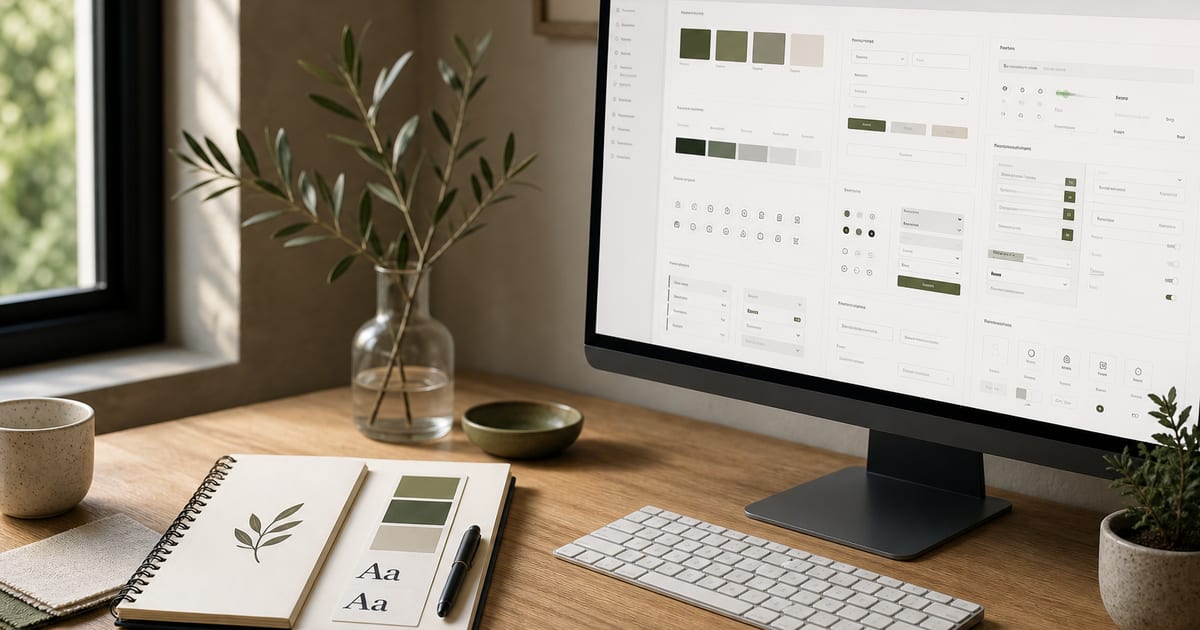
They are not the same layer
A **brand kit** defines identity: colors, typography, logo, voice, and basic usage rules. A **design system** adds components, patterns, accessibility specs, and governance — buttons through data tables, with docs and contribution rules.
In 2026, AI coding agents changed the order of operations. You used to postpone branding until after MVP. Now agents invent branding for you on every prompt unless you give them a kit first. The winning indie move: ship a thin brand kit (DESIGN.md + tokens) on day one; grow a design system only when reuse pain shows up.
AI Brand Kits focuses on that first layer — AI brand kit generator, playground, and agent exports — so you are not buying enterprise design-ops tooling before product-market fit.
Brand kit checklist (enough to start)
If your kit covers the items below, Cursor and Claude can build consistent UI without a Storybook.
- **Logo mark** — SVG or Lucide-based mark with clear space notes (logo maker)
- **Semantic colors** — ~9 roles, not 40 paint chips (color palette generator)
- **Font pair** — headline + body (font pair generator)
- **DESIGN.md** — agent-readable rules at repo root
- **Optional tokens.json / CSS variables** — for theme wiring
- **Voice one-liner** — how the product should sound in UI copy
- **Don'ts** — fonts, colors, and patterns that are off-limits
When to graduate to a design system
Upgrade when inconsistency costs more than documentation. Until then, a brand kit plus shared `components/ui` is enough.
- **Trigger: 3+ apps or surfaces** — marketing, app, admin sharing look — formalize components
- **Trigger: multiple engineers** — need Storybook or equivalent for discovery
- **Trigger: accessibility audits** — token contrast + component APIs (accessibility checker)
- **Trigger: design hire** — Figma library mapped 1:1 to code tokens
- **Still wait if** — you are solo, pre-revenue, and changing positioning weekly
- **AI path** — use AI design system generator / free AI design system tool after the kit exists
Choose your depth
Pick the lightest system that prevents embarrassment in a demo. Overbuilding a design system is how indie hackers lose months.
- **Weekend MVP** — brand kit + DESIGN.md only
- **Seed SaaS** — kit + shadcn/ui + Cursor rules
- **Agency client** — kit zip + brand guidelines PDF for stakeholder review
- **Growth-stage product** — kit tokens feeding a real design system and CI checks
FAQ
- Is a brand kit enough for production?
- Yes for early products if you also reuse a component library (e.g. shadcn). The kit keeps AI on-brand; components keep interaction patterns stable.
- Can AI generate a full design system?
- AI can draft tokens, docs, and component stubs. Governance, accessibility, and API stability still need human ownership. Start with a kit; expand deliberately.
- Where do Lovable and v0 fit?
- They accelerate UI drafts. Feed them your brand kit (see v0 brand kit and Lovable design system) so drafts match the product you already shipping.
- Should startups buy brand agencies in 2026?
- Sometimes for naming and positioning. For UI tokens and agent-ready docs, generate a kit first — then hire specialists when the story is stable.
- How does AI Brand Kits compare to Canva brand kits?
- Canva excels at marketing collateral. AI Brand Kits targets developer exports (DESIGN.md, tokens) for coding agents. See AI brand kit vs Canva.
Related
Free tools
Interactive utilities you can use without an account. Each tool links to related guides and export workflows across the site.